
Arabizi: A New Language? العربيزي: لغة جديدة؟
How Arabizi was born on old phones, why young people still use it, and whether it threatens Arabic or is just a creative new tool.
188 words 3 min Spoken + Formal Arabic
Transcript & Translation
Read, compare and understand
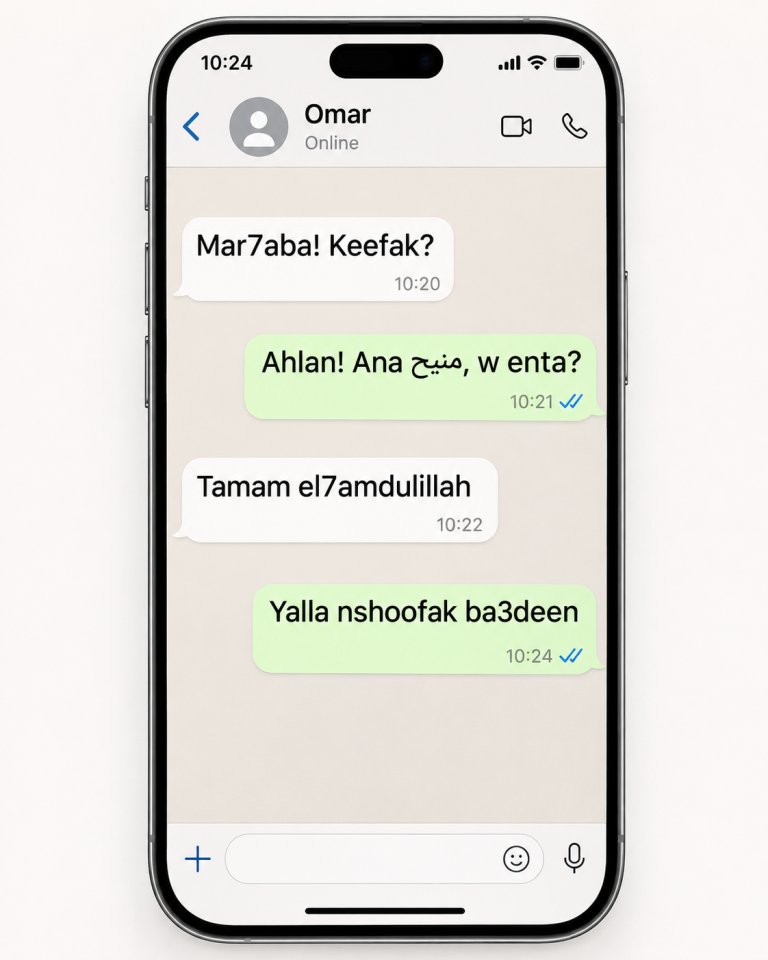
When the first mobile phones came out, they didn't have Arabic letters. So young people came up with a clever solution: write Arabic with English letters and use numbers for sounds that have no equivalent: 3 for ع, 7 for ح, and 2 for the hamza. That's how "Arabizi" was born, and it became the everyday language of a whole generation.
لَمّا إِجوا أَوَّل المُوبايْلات، ما كان فيها حُروف عَرَبِيّة. فالشَّباب لاقوا حَلّ ذَكي: يِكْتْبوا العَرَبي بِحُروف إِنْجْليزِيّة، ويِسْتَخْدْموا الأَرْقام لَلأَصْوات اللي ما إِلْها مُقابِل: الـ 3 لَلعين، والـ 7 لَلحاء، والـ 2 لَلهَمْزة. وهيك انْوَلْدَت "العَرَبيزي"، اللي صارَت لُغَة تَواصُل يَوْمِيّة لَجيل كامِل.
Lamma 2ijo 2awwal il-mobailat, ma kan feeha 7uroof 3arabiyye. Fa ish-shabab laqo 7all thaki: yiktbo il-3arabi b-7uroof ingleeziyye, w yista5dmo il-2arqam lal-2aswat illi ma 2ilha muqabil: il-3 lal-3ein, w il-7 lal-7a2, w il-2 lal-hamze. W hek inwaldat "il-3arabeezi", illi sarat lughet tawasul yawmiyye la-jeel kamel.
Today every device has an Arabic keyboard, and yet Arabizi is still alive and spreading. The reason is that it has become part of a digital identity unique to young people, and a fast, spontaneous way to write the dialect exactly as we pronounce it, without the rules and complications of Fusha.
اليوم كُلّ الأَجْهِزة فيها كيبورد عَرَبي، ومَع هيك العَرَبيزي لِسّا عايْشة وبِتِنْتِشِر. السَّبَب إِنْها صارَت جُزْء مِن هَوِيّة رَقْمِيّة خاصّة بالشَّباب، وطَريقة سَريعة وعَفَوِيّة لَلتَّعْبير عَن اللَّهْجة بالضَّبِط زَيّ ما بِنِنْطُقْها، بِدون قَواعِد الفُصْحى ولا تَعْقيداتْها.
Il-yom kul il-2ajhize feeha keyboard 3arabi, w ma3 hek il-3arabeezi lissa 3ayshe w btintishir. Is-sabab 2inha sarat juz2 min hawiyye raqamiyye 5assa bish-shabab, w 6areeqa saree3a w 3afawiyye lat-ta3beer 3an il-lahje bid-dabi6 zay ma bnin6uqha, bidoon qawa3ed il-fus7a w la ta3qeedatha.
But some people are worried about this trend. Linguists and teachers fear the new generation will lose its connection to Arabic script and struggle to read and write Arabic. Many teachers notice that their students have become faster at typing Arabizi than Arabic itself, and that's a sign worth paying attention to.
بَس في ناس قَلْقانة مِن هالظّاهْرة. اللُّغَوِيّين والمُعَلِّمين بِيْخافوا إِنُّه الجيل الجْديد يِفْقِد عَلاقْتُه بالحَروف العَرَبي، ويْصير يِقْرا ويِكْتِب العَرَبي بِصُعوبة. وكْتير مُعَلِّمين بِيْلاحْظوا إِنُّه طُلّابْهُم صاروا أَسْرَع بِكْتابِة العَرَبيزي مِن العَرَبي نَفْسُه، وهاد مُؤَشِّر بِيِسْتاهِل نوقَف عِنْدُه.
Bas fi nas qalqane min hath-thahra. Il-lughawiyyeen w il-mu3allimeen biy5afo 2innuh ij-jeel ij-jdeed yifqid 3alaqtuh bil-7uroof il-3arabi, w ysir yiqra w yiktib il-3arabi b-su3oobe. W kteer mu3allimeen biylaa7tho 2innuh 6ullabhum saro 2asra3 b-ktabet il-3arabeezi min il-3arabi nafsuh, w hada mu2ashshir biyistahil noqaf 3induh.
On the other hand, another view holds that language is a living thing, and every generation develops its own tools. According to this view, Arabizi doesn't threaten Arabic; it reflects young people's ability to be creative and adapt. Even in teaching Arabic to foreigners, Arabizi has become a useful tool for learning pronunciation before mastering the letters.
وبالمُقابِل، في وِجْهِة نَظَر تانْية بِتْشوف إِنُّه اللُّغة كائِن حَيّ، وكُلّ جيل بِيْطَوِّر أَدَواتُه. العَرَبيزي، حَسَب هالرَّأْي، ما بِتْهَدِّد العَرَبِيّة، بَل بِتْعَكِس قُدْرِة الشَّباب عَلى الإِبْداع والتَّكَيُّف. وحَتّى بِتَعْليم العَرَبي لَلأَجانِب، صارَت العَرَبيزي أَداة مُفيدة عَشان يِتْعَلَّموا النُّطُق قَبِل ما يِتْقِنوا الحُروف.
W bil-muqabil, fi wijhet nathar tanye btshoof 2innuh il-lugha ka2in 7ayy, w kul jeel biy6awwir 2adawatuh. Il-3arabeezi, 7asab har-ra2i, ma bthaddid il-3arabiyye, bal bti3kis qudret ish-shabab 3ala il-ibda3 w it-takayyuf. W 7atta b-ta3leem il-3arabi lal-2ajanib, sarat il-3arabeezi 2ada mufeede 3ashan yit3allamo in-nu6uq qabil ma yitqino il-7uroof.
Maybe the problem isn't Arabizi itself, but where we use it. A quick text to a friend is one thing; a formal email or an exam is something else. Being aware of the difference between contexts is what protects the language, not banning new tools.
يِمْكِن المُشْكِلة مِش بالعَرَبيزي نَفْسْها، بَس بالمَكان اللي بِنِسْتَخْدِمْها فيه. رِسالة سَريعة لَصاحْبَك إِشي، وإِيميل رَسْمي أَو امْتِحان إِشي تاني. والوَعي بالفَرِق بين السِّياقات هُوّ اللي بِيِحْمي اللُّغة، مِش مَنِع الأَدَوات الجْديدة.
Yimkin il-mushkile mish bil-3arabeezi nafsha, bas bil-makan illi bnista5dimha feeh. Risale saree3a la-sa7bak ishi, w email rasmi 2aw imti7an ishi tani. W il-wa3i bil-fariq bein is-siyaqat huwwe illi biy7mi il-lugha, mish mani3 il-2adawat ij-jdeede.
Discussion Questions
Try answering in Arabic first. Stuck? Tap Show English on any question.
-
1
بتستخدم العربيزي؟ بأي مواقف، ومع مين؟
Do you use Arabizi? In what situations, and with whom?
-
2
برأيك، العربيزي خطر على اللغة العربية ولا مجرد أداة تواصل؟
In your opinion, is Arabizi a threat to Arabic or just a communication tool?
-
3
ليش الشباب لسا بيكتبوا عربيزي رغم وجود الكيبورد العربي؟
Why do young people still write in Arabizi even though Arabic keyboards exist?
-
4
هل في لغات تانية بتعرفها صار فيها ظاهرة شبيهة؟
Is there a similar phenomenon in other languages you know?
-
5
كيف ممكن نشجّع الجيل الجديد يحب الكتابة بالحرف العربي؟
How can we encourage the new generation to love writing in Arabic script?